The False Choice Between Attack and Defence
Understand attack and defence as connected phases, and read the cues that help players choose their next action as possession changes.
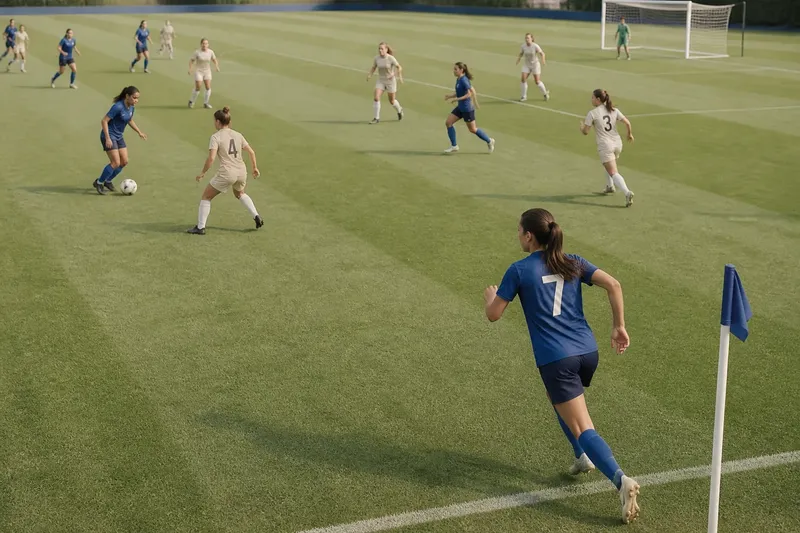
A winger sprints toward the corner flag, then checks her run as a teammate loses the ball. The next move is not simply “attack” or “defend”: she has to decide whether to press, block a passing lane, or recover toward her own goal. That quick adjustment is why the false choice between attack and defence can make a match harder to read. Teams move through changing phases, and a useful tactical decision depends on what has just happened and what is likely to happen next.
You can follow those changes by watching possession, nearby players, and the space each team is trying to use. The point is not to memorize a rigid sequence. It is to notice the cues that make one action more sensible than another, whether you are playing, coaching, or trying to understand why a team’s shape suddenly changes.
Start with possession
Begin by asking which team has controlled the ball for the moment. Possession is a helpful starting point, but it does not tell the whole story. A team can have the ball while still defending its own goal, and a team without it can be positioned to attack as soon as it wins it.
Watch the player who has the ball and the nearest options around them. Are teammates moving forward to offer a pass? Are opponents stepping up to close the space? Does the player have time to turn, or are they receiving under pressure? Those details reveal more than a quick label such as “the attacking team.”
For a player, this means looking up before the ball arrives when possible. A glance at teammates and opponents can help clarify whether the next action should preserve possession, move play forward, or protect against a turnover. For a viewer, the same habit makes the match easier to follow: track the ball, then notice the players whose movement changes the available options.
Read the transition
A transition is the brief shift after possession changes. The team that loses the ball may try to win it back immediately, or it may retreat and rebuild its defensive shape. The team that gains it may attack quickly while opponents are scattered, or slow down to secure possession and bring teammates into the play.
Neither response is automatically right. The decision depends on the position of the ball, the number of nearby players, and the spaces that are open. A rushed attempt to press can leave a passing lane behind the first defender. An immediate forward pass can also surrender the ball if the receiver has no support.
Say a team loses the ball near the sideline, with two teammates close enough to challenge and the opponents facing toward their own goal. They might press together, aiming to limit the opponent’s options before a safe pass is available. If the opponents escape into open space and the nearest teammates are far away, the more sensible response may be to recover toward goal and delay the attack. The observable difference is whether the team can apply pressure without leaving a dangerous space unprotected.
When watching, look for the first few actions after the turnover. Does the new possession holder turn forward? Does a nearby opponent close them down? Do teammates sprint to support or recover? Those movements show a team’s immediate intention, even before its longer-term shape becomes clear.
Choose the next action
Once you see the phase, consider the player’s next decision. A useful question is not “Is this an attacking player or a defensive player?” but “What does this moment ask this player to do?” A forward may need to help defend by screening a pass. A defender may carry the ball forward if space opens and teammates cover the risk.
For a player in possession, consider three broad options:
- Keep the ball. If pressure is close and forward space is crowded, choose a short pass, a safer angle, or a pause; if a secure option is unavailable, protect the ball until support arrives rather than forcing a pass.
- Advance the play. If a teammate can receive with support and the route is not immediately closed, carry or pass forward; if the receiver would be isolated, keep possession or use a supporting pass instead.
- Protect against the next turnover. If teammates are moving forward and an opponent could attack into an empty area, retain enough cover behind the ball; if the threat is already covered, a supporting position closer to the play may be useful.
- Check the receiver’s space. If an opponent can intercept the passing lane, choose a different angle or target; if the lane is clear and the receiver can act, make the pass.
- Watch the nearest opponent. If they are closing quickly, release the ball or shield it while support arrives; if they hold their position, look for a controlled carry or a forward pass.
- Read the team’s shape. If several teammates have gathered around the ball, keep an outlet available elsewhere; if the team is spread out, use the nearest safe support rather than attempting a pass that leaves the receiver alone.
These options can overlap. A pass that moves the ball forward may also draw an opponent away from a teammate. A player who stays behind the ball may help retain possession while preparing to challenge if it is lost. Tactics often work through such combined effects rather than through a clean division between attack and defence.
Off the ball, ask what the team needs from your position. Moving toward the ball can offer support, but it can also crowd a teammate’s space. Staying wide may stretch the opposition and open a central route. Dropping back can protect against a counterattack, yet too many players retreating at once may leave the ball carrier without nearby help. The useful position depends on the team’s shape and the location of the play.
Track space and cover
Space is not just the patch of field around the ball. It includes the passing lanes, open channels, and areas opponents could reach if the team loses control. A player may look free while being tightly marked through a nearby opponent’s position. Another player may appear far from the ball but be important because they are keeping an escape route open.
Notice how teammates relate to one another. If several players move toward the ball, does someone remain available behind them? If the team pushes forward, are players positioned to challenge an opponent who collects a clearance? These are questions about cover: the support that makes a forward action less exposed.
Good cover does not mean avoiding risk altogether. It means understanding which space may be left open and whether teammates can respond if the opponent exploits it. In some situations, a team deliberately commits players forward because it wants to put pressure on the opponent’s goal. In others, keeping more players behind the ball may suit the score, the location, or the opponent’s threat.
When watching, follow one player who is not near the ball. If that player shifts across to protect a lane or stays back while teammates advance, their movement may explain why the team can attack without abandoning defensive responsibility. It is an especially useful way to spot tactical work that a camera or crowd’s attention can easily miss.
Make the cues practical
To read a phase in order, use a simple sequence of observations rather than trying to name a whole system at once:
- Locate the ball. If it is secure, contested, or newly won, judge the next action from that state; if you cannot tell, watch the nearest players’ reactions before deciding what the phase is.
- Check immediate pressure. If an opponent can challenge the ball carrier and has support, expect a quick pass or shield; if the carrier has time, look for a controlled turn or advance.
- Look for forward space. If a pass or carry can advance play without isolating the receiver, moving forward is available; if the route is closed, retain possession or change the angle.
- Find the cover. If a teammate is positioned to respond when possession changes, the team can consider a more forward action; if no cover is visible, keep support behind the ball or slow the attack.
- Watch the next movement. If players press, retreat, keep possession, or send support forward, read that movement as the team’s response; if the action changes, reassess the new space rather than sticking to the first interpretation.
Imagine a team has just won the ball near its own sideline. The nearest opponent is closing, a teammate is free behind the ball, and a forward lane is open but the intended receiver has no nearby support. The ball carrier first checks the forward lane and sees the receiver’s isolation, then uses the free teammate behind the ball to escape pressure. That teammate receives facing the field, while another player moves wide to create a safer forward option. The resulting decision is to secure possession and build forward rather than force an exposed pass; if the lane had stayed clear and the receiver had gained support, the forward pass would have been the better option.
This is a way to organize your attention, not a formula that decides every action. The same cue can point to different choices depending on the team’s plan. A player who is free in one situation may be a poor passing option in another if the pass would expose a teammate or allow an opponent to intercept.
On the field, teammates can make these choices easier by communicating clearly and moving in ways that show their intentions. A player who wants a pass can present an angle; a player covering behind can remain visible to the ball carrier. Players do not need to chase every loose ball to contribute. A well-positioned teammate can narrow an opponent’s options before making a tackle.
Why labels mislead
Can a team attack while defending?
Yes. A team without the ball can press high and try to regain it near the opponent’s goal, turning its defensive action into a chance to attack. The players are defending possession, but their position and intent may also create an immediate scoring opportunity.
Does possession always mean control?
No. A team can hold the ball in a crowded area with few forward options, while its opponent stays compact and waits for a mistake. Control depends on whether possession offers useful choices, not simply on which side has the ball.
What is the difference between pressing and recovering?
Pressing means applying pressure to the ball carrier or limiting their passing options. Recovering means moving into a more protective position, often closer to the team’s goal; a team may use either response, or combine them as players assess the situation.
Why do players move backward during an attack?
A backward movement can create a passing angle, draw a marker away, or help keep the ball while teammates advance. It is not necessarily a retreat from attacking intent; the movement can support the next forward action.
Skip rigid labels
It is not worth the effort to classify every player as an attacker or defender based on a fixed role. Positions and responsibilities matter, but they change with the ball’s location and the team’s choices. A forward may help press; a defender may join an attack; a midfielder may alternate between both within a short passage of play.
Labels are still useful when they describe a player’s usual starting role or a team’s broad plan. They become less useful when treated as an explanation for every movement. Instead, connect each action to the immediate problem: pressure, open space, support, or protection against a turnover.
If the sport has specific rules about challenges, contact, or player positions, those rules shape which responses are available. Team instructions and the match situation also matter, so players should adapt their decisions to the game they are actually playing rather than copy a tactic in isolation.
Read the whole phase
The false choice between attack and defence fades when you follow the sequence: possession changes, players respond, space opens or closes, and the next action creates another situation. A team’s movement may contain defensive and attacking intentions at once. Watching for those intentions makes it easier to understand why players press, pause, pass backward, or sprint forward.
Next time you watch a match, pick one turnover and follow the players around it instead of looking only at the ball. Notice who challenges, who covers, and who offers the next pass. That small shift in attention can reveal the tactical decision hidden inside what first looked like a simple change from attack to defence.